
Introduction
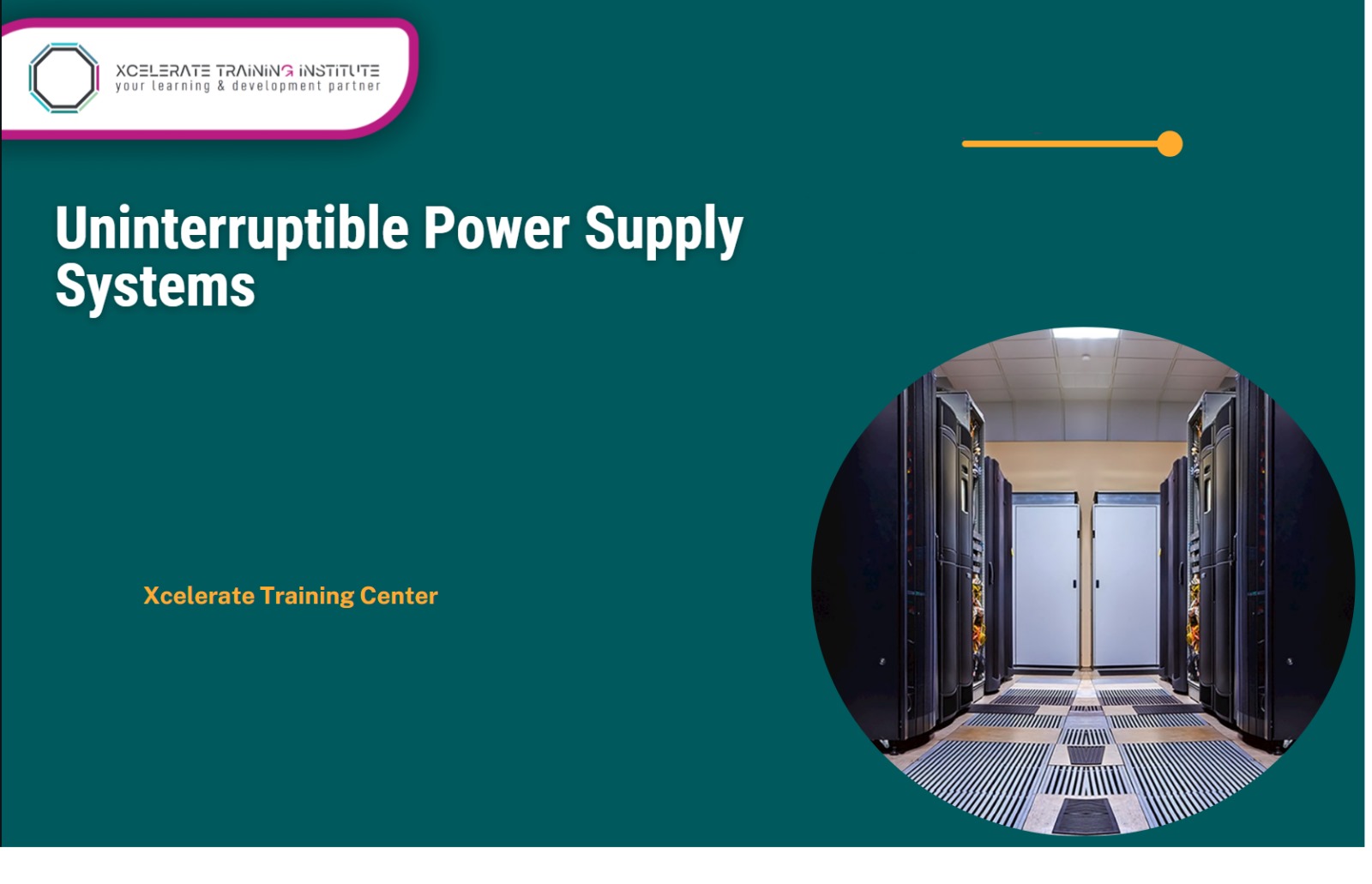
This course by Xcelerate Training Institute explores various types of dynamic and static Uninterruptible Power Supply (UPS) systems. Electrical power outages can be detrimental to devices, power networks, and systems. UPS systems ensure that the electrical power supplied is stable, reliable, and secure. Moreover, UPS improves power quality for semiconductor-utilizing devices. Some types of UPS systems, such as dynamic uninterruptible power supply and diesel rotary uninterruptible power supply (DRUPS), are known for their security and stability.
Learning Objectives
Upon completing this course, participants will be able to:
- Appreciate the importance of battery monitoring in UPS.
- Understand why power quality is crucial in UPS systems.
- Analyze the characteristics of UPS batteries.
- Master the operations of different static UPS systems.
- Understand UPS topologies in depth.
- Recognize the significance of continuous power supply for critical and essential loads.
Training Methodology
Training will be administered by well-trained professionals in their respective fields. The course includes theoretical sessions and practicals both in class and online. Participants will be assigned tasks and assignments in groups and as individuals. Interaction with tutors and other participants is highly encouraged. Role-play will be used whenever applicable. Questions are encouraged to help learners thoroughly understand the concepts.
Benefits for Your Organization
Organizations can benefit from:
- Reduced and well-managed operational costs due to improved power quality.
- Seamless operations with minimal or no power supply interruptions.
- Adherence to safety measures, regulations, and legislation when maintaining UPS systems.
- Enhanced organizational credibility and development from using uninterruptible power.
- Increased productivity through minimized design, testing, and project acceptance time.
- Regular training of employees on power quality improvement and battery types.
- Detailed knowledge of UPS systems.
Benefits for You
Participants will gain:
- Comprehensive understanding of UPS utilization.
- Enhanced foresight to address power interruptions.
- Pride in significantly contributing to organizational development.
- Potential to take on higher-level responsibilities.
- Understanding and appreciation of power quality issues.
- Grasp of critical load applications.
- Readiness to review electrical installations.
- Better understanding of UPS maintenance requirements.
Target Audience
This course is ideal for:
- UPS supply and control engineers and technicians in various scenarios such as industries, homes, and manufacturing.
- Power system engineering technicians involved in daily activities.
- Operations and maintenance technicians and engineers responsible for maintaining electrical equipment.
- Project engineers who need to understand power quality issues and ensure uninterrupted power supply.
- Engineers dealing with electrical power machines.
Course Outline
UPS Technologies
- Power quality issues and main failure avoidance
- UPS supply systems using single and double sources
- Automated Transfer Switch (ATS) advantages and functionalities
- Batteries migration and UPS systems
- UPS protection systems
- Standby generator characteristics
- Primary types and supply systems of UPS
Dynamic UPS Advantages and Architecture
- Kinolt system analysis (former Euro Diesel)
- Kinetic energy conservation and storage in UPS systems
- Batteries and flywheels in dynamic UPS systems
- Dynamic system reliability solutions
- Dynamic UPS system operation and architecture
- Features of dynamic uninterruptible supply systems
- Unblocking Diesel rotary UPS systems
Static UPS Architecture and Technologies
- Advantages of offline UPS
- Delta conversion uninterruptible power supply
- Power factor in UPS
- UPS ratings
- Redundancy in UPS
- Double conversion uninterruptible power supply
- UPS components and functionality
- Parallel systems for building redundancy
- Transformer-based and transformerless UPS operations
UPS Configurations
- Evaluating power supply maintainability and reliability
- Defining different load classes and effects of poor power supply quality
- Maintainability requirements and troubleshooting procedures for UPS
- Installation and operations of uninterruptible power supply systems
- Practical configuration of UPS systems
- Characteristics and operations of UPS
- Effects of different power sources on power quality
- UPS system selection criteria for reliable power supply
- Distribution system analysis and designs
Battery Monitoring, Types, and Chargers
- Importance and advantages of battery monitoring
- Battery monitoring conditions for UPS systems
- Types of chargers for UPS systems
- Maintenance characteristics of nickel-cadmium and lead-acid AGM batteries
Rotary and Dynamic UPS Systems
- Operations of synchronous motors and machines
- Configurations of DRUPS
- Principles and features of HiTec DRUPS
- Advantages of rotary UPS
UPS Utilization
- Induction coupling features
- Configuration of HiTec diesel uninterruptible power supply systems
- Freewheel clutch
- Flywheel
UPS for Industries
- Types of UPS used in industries
- Industrial UPS configurations
- Industrial UPS maintenance
- Industrial UPS testing, recommissioning, and operations procedures
- Globally acceptable standards for housekeeping in UPS maintenance
- Safety issues and principles for maintaining UPS systems