
Introduction
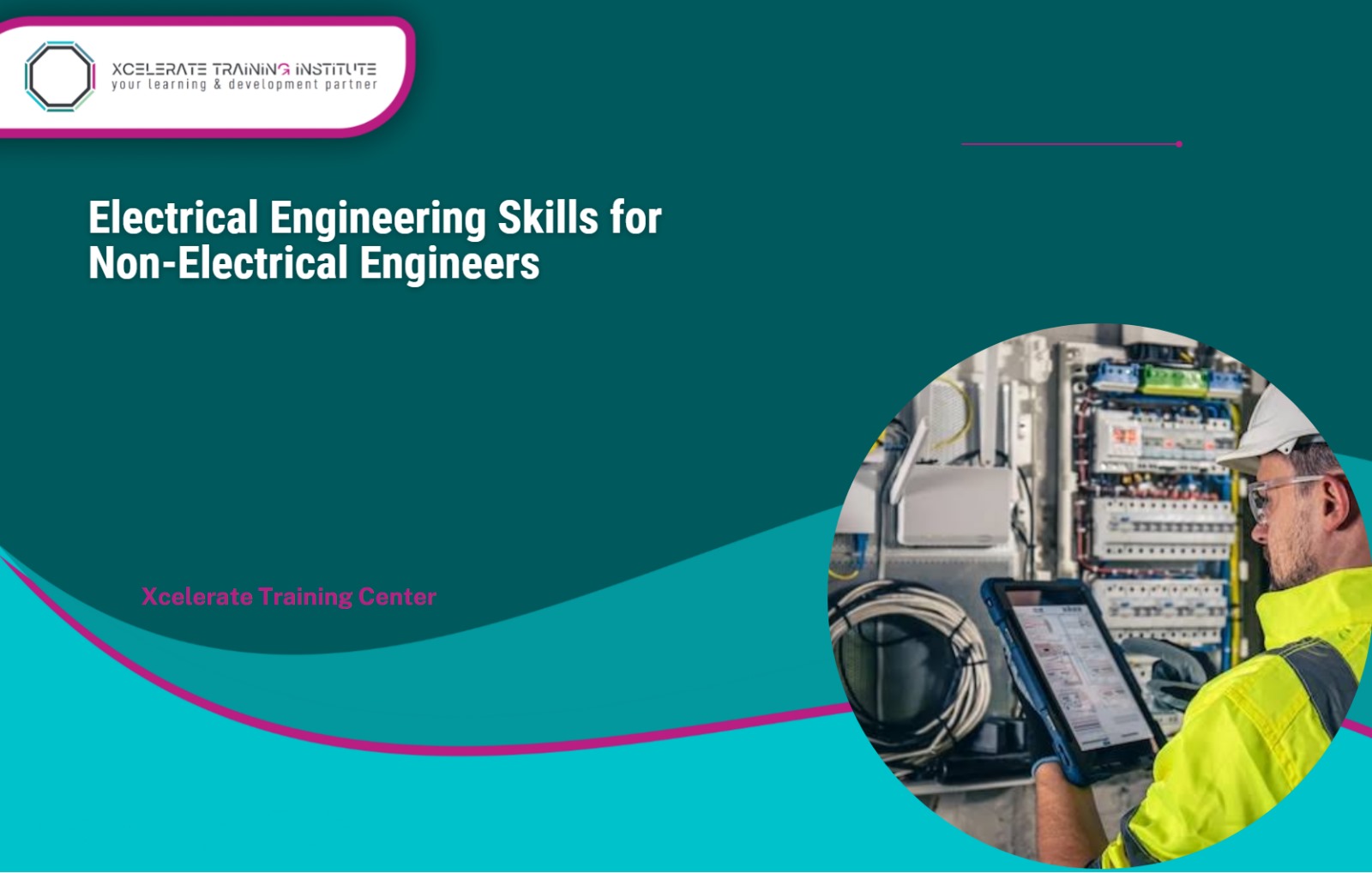
Understanding electrical engineering is crucial for effectively using and operating electrical energy and equipment. Unlike oil or air, electricity is not naturally available but generated from primary energy sources like coal, natural gas, or nuclear reactions. While it’s a secondary source, its critical role requires separate consideration of its supply and demand. For many non-electrical engineers, comprehending how electricity works and specifying electrical equipment can be challenging. This course provides essential electrical engineering knowledge and operational principles of common electrical devices for non-electrical engineers.
Learning Objectives
Upon completing this course by Xcelerate Training Institute, participants will:
- Grasp fundamental principles of electrical engineering.
- Learn key electrical laws.
- Understand single-phase vs. three-phase systems.
- Recognize essential electrical safety concepts.
- Understand the impact and significance of harmonics.
- Apply electrical engineering knowledge to business and practical applications.
- Learn safety procedures for electrical installations.
Training Methodology
This collaborative course includes:
- Lectures
- Seminars & Presentations
- Group Discussions
- Assignments
- Case Studies & Functional Exercises Following the ‘Do-Review-Learn-Apply’ model.
Benefits for Your Organization
Organizations benefit from:
- An all-inclusive overview of electrical engineering for non-electrical engineers.
- Support for technical committees and boards in creating and updating standards.
- Assistance in writing, editing, and processing electrical engineering standards.
- Facilitated discussions with government organizations on relevant regulations.
Benefits for You
Participants will gain:
- Updated knowledge on electrical power system planning.
- Tailor-made academic training in electrical engineering for non-electrical engineers.
- Training, assessment, and certification by experts.
- Skills to identify and report issues with electrical systems.
- Ability to perform test activities and site procedures related to electrical engineering systems.
Target Audience
This course is suitable for:
- Non-electrical engineers
- Individuals managing or interacting with electrical engineers
- Individuals assessing electrical engineering projects
- Energy managers
- Engineering managers
- Plant engineers
- Maintenance engineers
- Facilities managers
- Energy consultants
Course Outline
Introduction
- Definitions and basic concepts of electricity and electrical engineering
- Static electricity, conductors, insulators, and electron flow
- Electric circuits, voltage, current, and resistance
- DC circuit analysis and basic electronic devices
Fundamentals
- AC fundamentals, power factor, and electrical power bill computation
Electrical Fundamentals
- Capacitors, inductors, and alternating current
- Faraday’s Law, magnetic field, and machinery principles
Transformers
- Characteristics, types, and construction of transformers
- Circuit analysis and voltage regulation
- Transformer efficiency and tap changers
Motors & Inverters
- Induction motor construction and operation
- Torque-speed characteristics and AC machine power flow
Uninterruptible Power System (UPS) & Industrial Batteries
- UPS operation, voltage regulation, and maintenance
- Battery selection, sizing, and maintenance
Direct Current (DC)
- Properties, uses, and applications of DC
Alternating Current (AC)
- Properties, uses, and applications of AC
AC vs. DC
- Differences and similarities, RMS voltage, current, and power
Ohm’s Law
- Relationship between voltage, current, and resistance
- Power calculations and circuit wiring
Electrical Safety
- Importance of safety, physiological effects, and safe practices
Series and Parallel Circuits
- Analysis of series and parallel circuits, power calculations
Batteries
- Types, capacity, and maintenance of batteries
Voltage Drop Calculations
- Calculations in DC and AC circuits, cable size selection
Magnetism and Electromagnetism
- Permanent magnets, electromagnetism, and electromagnetic induction
Electricity Distribution
- Global standards and distribution criteria
Safety
- Human response, outdoor and indoor safety, grounding, and lockout/tagout procedures